
Artisun Skinwear™
Artisun is an Indian sun care brand from the founder of Luxe by Kan, built on the idea that sunscreen should be something you want to wear. A different way to think about sunscreen: not chosen by skin type, chosen by the day. Two formulas, made with the best filters and actives from Germany, Japan and Finland.
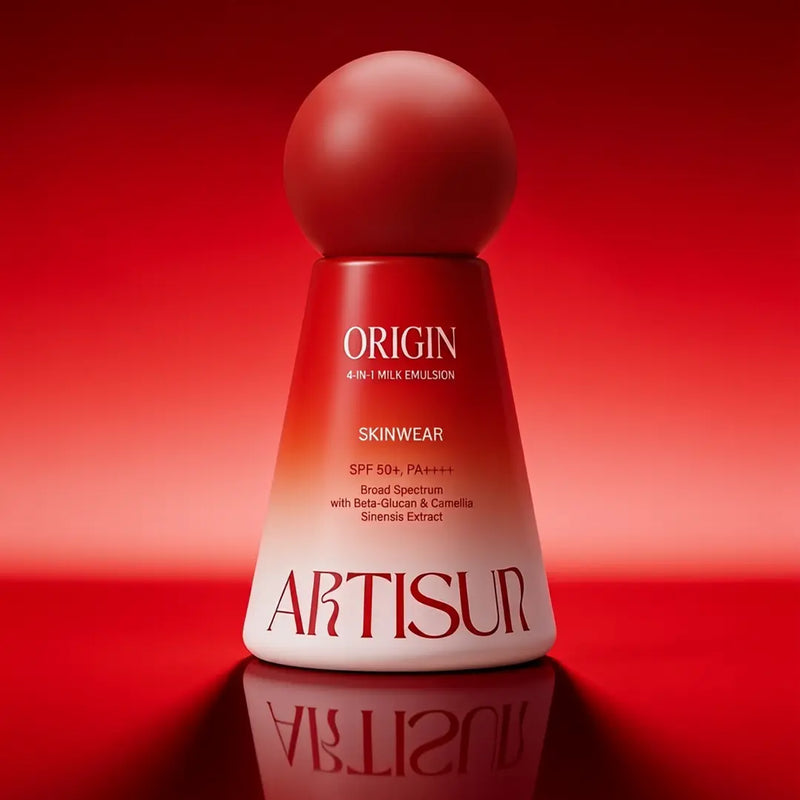
Artisun Origin 4-in-1 Milk Emulsion Sunscreen SPF 50+ PA++++
Replaces four morning steps with one. Serum, moisturiser, SPF 50+ and primer in a single light layer. No white cast.
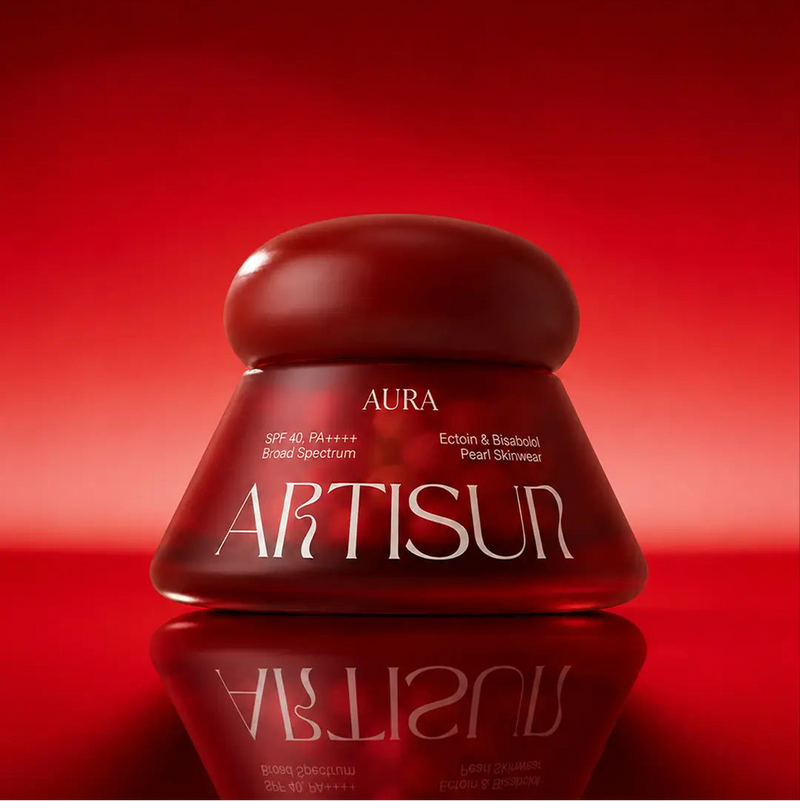
Artisun Aura Pearl Skinwear™ Sunscreen SPF 40 PA++++
Sunscreen you can actually reapply. Press the pearls in over finished makeup without disturbing it. Invisible on every skin tone.
Origin or Aura
They’re not versions of each other. Most people who buy both use Origin in the morning and keep Aura in a bag.
If you’re deciding fast: four steps in your morning and you want one, take Origin. You never reapply and you know it, take Aura.
Who this is for
- Oily skin
- Both are light and non-comedogenic, tested on the finished formula rather than guessed at from the ingredient list. Aura sets neutral. Origin absorbs in seconds.
- Deeper skin tones
- No white cast on either. Aura goes invisible, Origin blends clear.
- If you wear makeup
- Origin dries to a base foundation sits on without rolling. Aura presses over finished makeup without moving it.
- Humid cities
- Made for Indian heat and humidity from the start, not reformulated from a European base.
- Desk jobs
- UVA comes through window glass, and it’s the wavelength behind tanning and pigmentation. PA++++ is the highest UVA rating there is.
- If you forget
- The dose changes with the weather, so the product tells you what today needs instead of leaving you to guess.
What Skinwear™ means
You don’t pick a jacket based on your body type. You pick it based on what it’s doing outside.
Sunscreen has been sold the other way round for years. Choose by skin type, then wear the same thing every day for a year. Skinwear is the other approach — sun protection you choose the way you choose what to wear, and adjust when the day changes.
Not a new category of skincare. Just a different question at the start.
Why we build for weather, not skin type
Here’s the thing nobody tells you: the same sunscreen behaves completely differently in January and July.
Sunscreen protects by sitting as an even film across your face. Heat thins that film. Humidity stops it setting properly. Sweat lifts it off. Dry winter air makes it cling and flake in patches you can’t see. None of that is about your skin. It’s about the air.
Which is why a sunscreen developed for European weather and shipped here is doing a job it was never tested for. We built ours from the other end — 40°C, 80% humidity, monsoon, a Delhi winter — using filters and actives sourced from wherever each one is done best.
And because the conditions change, the amount you need changes. Two pumps of Origin on an ordinary day, three when it’s dry-hot or the sun is strong. Same with Aura’s pearls. You’re not getting less protection on a two-pearl day — both amounts are tested to the full SPF. You’re just wearing what the day actually needs.
Questions people actually ask
Is SPF 40 enough, or should I just get the 50?
40 is enough for most days. The scale isn’t linear — SPF 30 filters around 97% of UVB, SPF 40 about 97.5%, SPF 50 about 98%. The gap is under a percentage point.
What decides your actual protection is how much you put on. SPF is measured in a lab at 2mg per square centimetre of skin, and most people use a quarter to half of that. That drops your real protection far more than the difference between 40 and 50 ever will. An SPF 40 you wear properly beats an SPF 50 you’re stingy with.
How much sunscreen do I actually need for my face?
Two finger-lengths for face and neck. For most people that’s noticeably more than they’ve been using, and it’s the main reason sunscreen underperforms.
Both products give you something countable instead of asking you to eyeball it. Two pumps of Origin or two pearls of Aura on a normal day. Three of either in dry heat, strong sun, or cold dry weather.
Do I need sunscreen indoors, or when it’s cloudy?
Yes to both. UVA passes through window glass and through cloud, and it’s the wavelength most linked to tanning, pigmentation and ageing. A desk by a window and an overcast monsoon afternoon both carry more of it than they feel like they do.
Going lighter in humid months is fair. Going without isn’t.
Why does my sunscreen roll up under makeup?
Nearly always because of what went on underneath. A moisturiser that hasn’t absorbed, a serum still wet, or a silicone primer meeting a water-based formula — any of those and the layer gathers instead of spreading.
Give it two to three minutes between steps, longer when it’s humid, and press rather than rub. Origin dries to a base makeup sits on cleanly. Aura is meant to go on top of finished makeup, not under it.
Will either of these leave a white cast?
No. Both have been checked across skin tones. Aura goes completely invisible with nothing sitting on the surface. Origin blends clear to a dewy finish.
White cast usually comes from mineral filters — zinc oxide and titanium dioxide — which sit on top of the skin and scatter light. Neither formula leans on them.
Does sunscreen expire? How long after opening?
It does. Sunscreen has to hold its stated SPF for three years from manufacture, so check the date on the pack. Once it’s open, go by the period-after-opening symbol.
Heat shortens all of that. A tube that’s lived in a car or on a bathroom windowsill degrades faster than one kept at room temperature. If the colour, smell or texture has changed, replace it whatever the date says.
How often should I reapply?
Every two to three hours outdoors, and sooner if you’ve been sweating or towelled your face. Indoors and away from a window, one application in the morning usually holds.
Reapplying over makeup is the point where most people quit. That’s the whole reason Aura exists — the pearls press in without disturbing what’s already on your face.
Can I use these if I break out?
Yes. Both are non-comedogenic, tested on the finished product rather than inferred from the ingredient list. That distinction matters, because how a formula behaves depends on the whole thing, not on whether one ingredient in it has a bad reputation.
If you’re prone to breakouts, give any new sunscreen about three weeks before you decide.
Are they vegan? Is there fragrance?
Both are vegan and cruelty-free. Both are lightly fragranced — worth knowing before you order if you prefer fragrance-free skincare.
How long does delivery take?
2 to 4 working days anywhere in India, and delivery is free on both products with no minimum order.